
 with a slight bitter, acrid flavor of cucumber with a delicate carrot finish.
Linaria flowers introduce interesting and unusual flavors to your dishes and add a flourish of color. A new area for innovative chefs who want to see their dishes photographed and posted on facebook and social media platforms.
Linaria vulgaris edible flowers are used for their colour, decorative, on delicate savoury dishes, they should be consumed only in small amounts at a time.
Linaria vulgaris edible flower is also known as Butter and Eggs. And also as a wild snapdragon. Members of Porophyllum, or the poreleaf genus, are described as “strongly scented” by the Jepson eFlora.
The fresh scent of Porophyllum linaria is beautifully noticeable, on fingers from having handled it. Its strong flavour is described as akin to fresh cilantro with overtones of lemon and anise, and this species is used as a cooking herb.
In Mexico, it is known as pepicha or pipicha. Leaves are used as an ingredient in soups, as a condiment, in salads and salsas, and with fish, and often used to flavour meat dishes.
In some markets fresh and dried Linaria edible flowers are available for sale as a condiment, and used for medicinal herbs.
Medicinally
Linaria vulgaris edible flowers, yellow toadflax, people have taken them for digestive and urinary tract disorders. These edible flowers are used to reduce swelling, relieve water retention by increasing urine production as a diuretic and cause sweating.
People have directly applied LInaria yellow toadflax to the skin for hemorrhoids, wounds, skin rashes, and foot ulcers. This acts on the liver and was widely used as a diuretic in the treatment of oedema. The whole plant is antiphlogistic, astringent, cathartic, detergent, depurative, hepatic, ophthalmic and purgative.
Linaria vulgaris edible flower is valued for its laxative and diuretic function. The treatment employed internally of oedema, jaundice, liver diseases, gall bladder. The juice of the plant, or the distilled water is for cleaning ulcerous sores and good for the inflamed eyes. It is used in the treatment of diarrhea and cystitis.
The plant should be used with caution. Ask the advice of a qualified practitioner preferably it should not be taken by pregnant women. Dosage is critical, the plant might be slightly toxic.
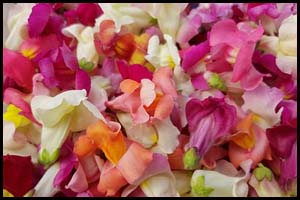
Snap Dragon Edible Flowers
The snapdragon genus, Antirrhinum, is from the Greek, meaning ‘opposite the nose’ or ‘unlike the nose’. Your nasal acuity is closely linked to your taste perception. If you have ever tasted a snapdragon, you don’t need to imagine why this...
Read More
Dianthus Edible Flowers
Dianthus edible flowers are a beautiful addition to salads and desserts. Pink dianthuses add aesthetic elegance to a variety of dishes great for social media, facebook photos. Their warm spice like scent makes them a perfect garnish for pork, curry,...
Read More
Alyssum Edible Flowers
Alyssum a most beautiful Edible Flower The leaves and edible flowers of alyssum have a pungent flavor. The plant is commonly used in Spain as an antiscorbutic and diuretic. This is apparently the source of the idea that it is...
Read More