
 The leaves and edible flowers of alyssum have a pungent flavor. The plant is commonly used in Spain as an antiscorbutic and diuretic. This is apparently the source of the idea that it is helpful in calming anger. In Afghanistan, this plant is used medicinally for asthma and nervous disorders. At one time this herb had medicinal uses in the treatment of rabies,
It is also highly esteemed there as an astringent in the treatment of gonorrhoea. The young leaves, stems and flowers are sometimes used as a flavouring in salads and other dishes where pungency is required. Try adding them to salads, cold soups or even omelettes.
The small flowers are continually produced and have sweet scent, but it is an innocent sweetness. Some compare the scent to warm honey, others to the smell of new-mown hay. In the language of flowers, this herb stands for sweetness of soul and worth beyond beauty.
This plant is also said to be protective, especially against glamours. This plant is an annual that self-seeds very readily. It can be used in companion planting to attract hoverflies, whose larva eats aphids. Bees are attracted to the sweet aroma of Alyssum.
The botanical or scientific name for Alyssum is Lobularia maritima, is a member of the mustard family. It is a honey-scented low-growing and profuse-flowering plant.
It is a very ornamental plant and a fast-growing plant. Easily grown from seed in average, medium moisture, well-drained soils in full sun to part shade. Tolerates dryish soils. Sow seed directly in the ground several weeks before the last frost date. For earlier bloom, start seed indoors 5-6 weeks before last frost date.
Nurseries sell starter Alyssum plants in six cell packs. Set seedlings out just before last frost date. Shear plantings after first bloom to encourage a second flush of bloom. Blooms spring to frost in cool summer climates.
Plants usually revive as cooler fall temperatures arrive. Seed may also be sown in August for fall bloom. Sweet Alyssum is a good choice for beneficial planting in greenhouses and containers, in addition to outdoor production.
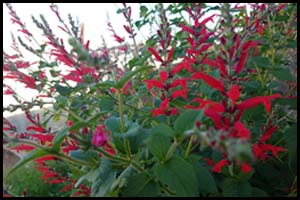
Common Sage Edible Flowers
Common sage (Salvia officinalis) and Greek sage (Salvia fruticosa). Pineapple sage usually isn’t as readily available in markets Medicinal UsesThe Salvia genus gets its name from the Latin salvare which means “to save.” Many cultures, including the Greek and Roman,...
Read More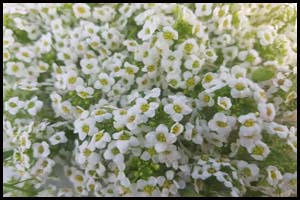
Alyssum Edible Flowers
Alyssum a most beautiful Edible Flower The leaves and edible flowers of alyssum have a pungent flavor. The plant is commonly used in Spain as an antiscorbutic and diuretic. This is apparently the source of the idea that it is...
Read More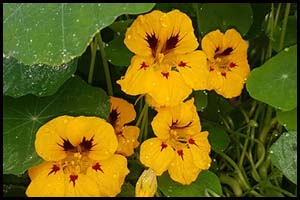
Nasturtiums Edible Flowers
Nasturtiums produce colourful edible flowers, perfect for dressing up green salads or sprinkled into soups. The taste is initially sweet, but the taste then transcends to a hot and peppery, radish like watercress. Nasturtium flowers can be mixed with chives,...
Read More